
Philosophy
-
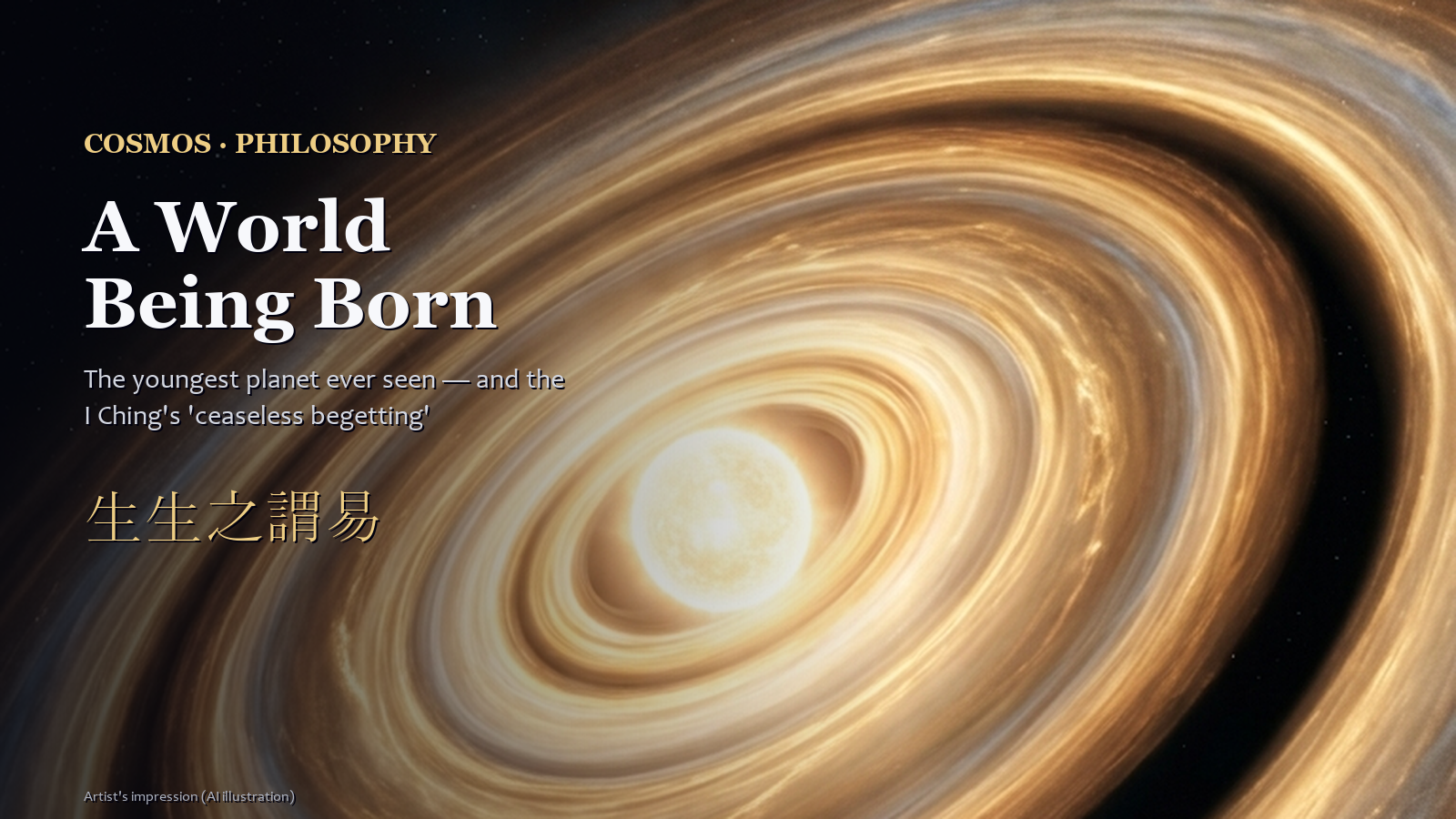
A World Still Being Born: The Youngest Planet Ever Seen, and the Book of Changes’ ‘Ceaseless Begetting’
Astronomers directly imaged Elias 2-24 b, a planet less than a million years old — the youngest ever seen, still pulling material from its disk. The universe is not finished; it is still giving birth.
-
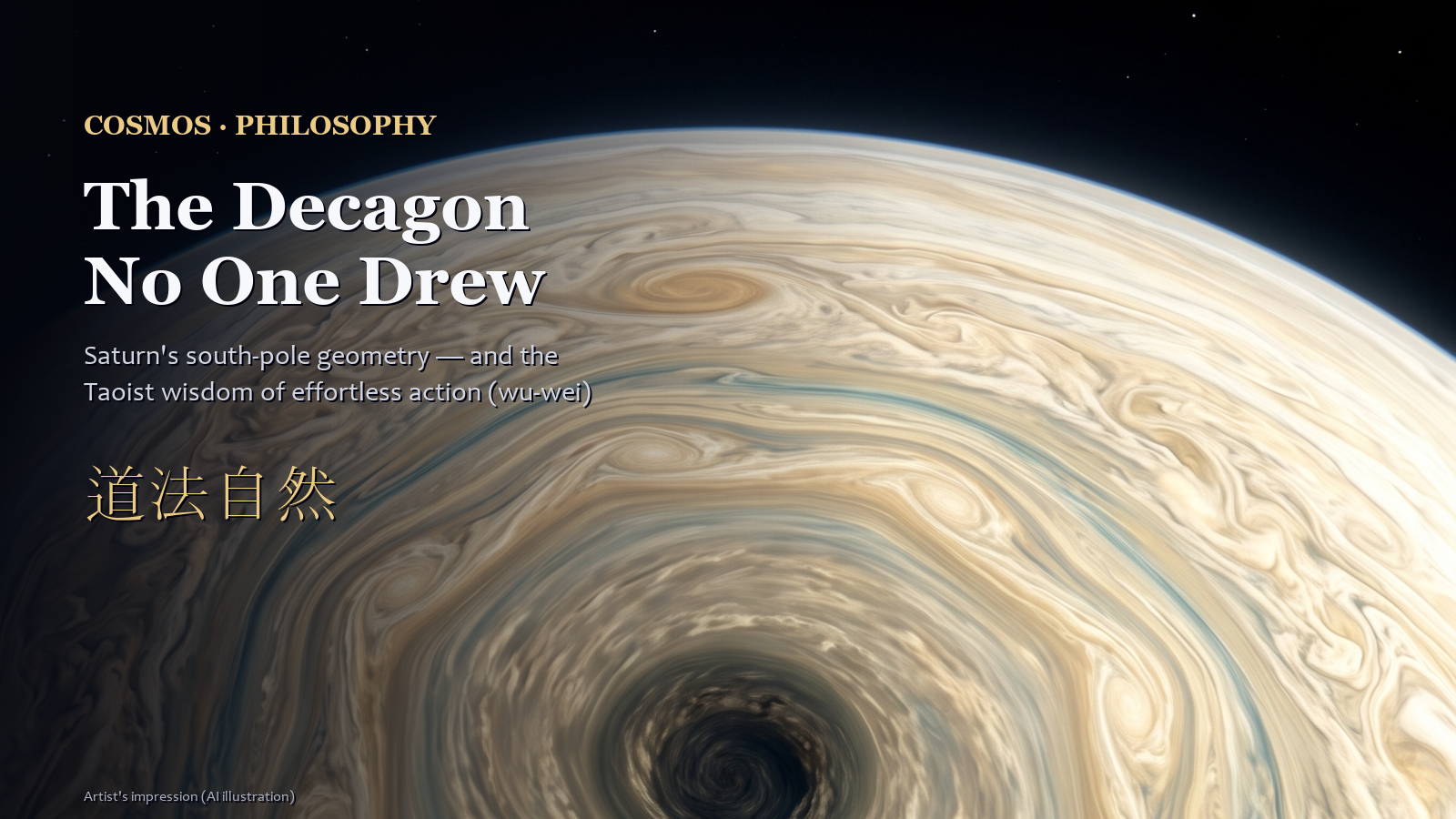
The Decagon No One Drew: Saturn’s South-Pole Geometry and Laozi’s ‘The Way Follows What Is So of Itself’
Hubble found a perfect ten-sided shape circling Saturn’s south pole — no ruler, no wall, no designer, just fast and slow winds meeting. Laozi named this 2,500 years ago: the Way follows what is so of itself.
-
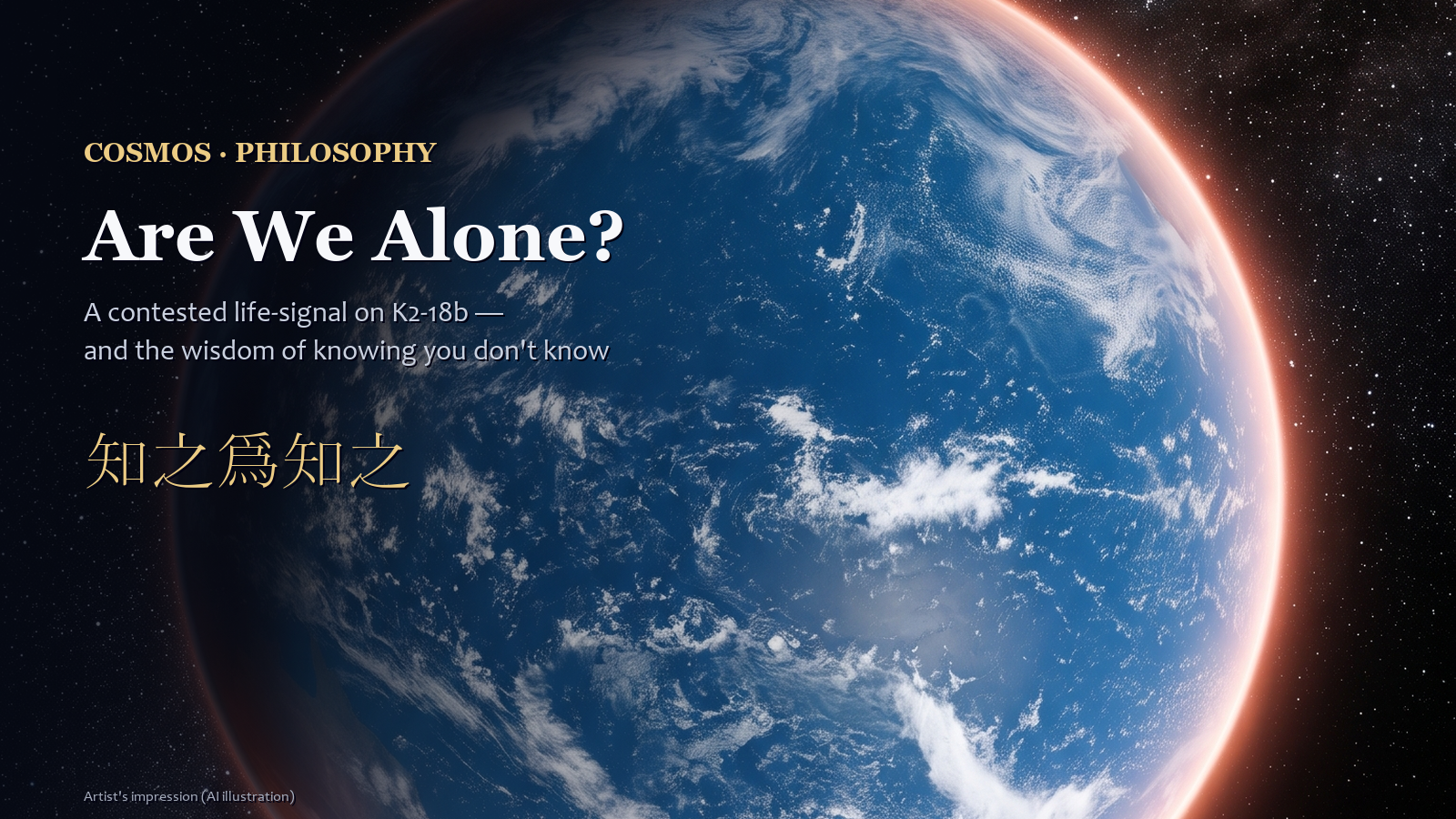
Are We Alone? The Contested Life Signal on K2-18b, and a 2,500-Year-Old Truth: To Know That You Do Not Know
JWST found a possible fingerprint of life on K2-18b, 124 light-years away then scientists said, honestly, we do not know yet. Confucius called that caution the highest wisdom.
-
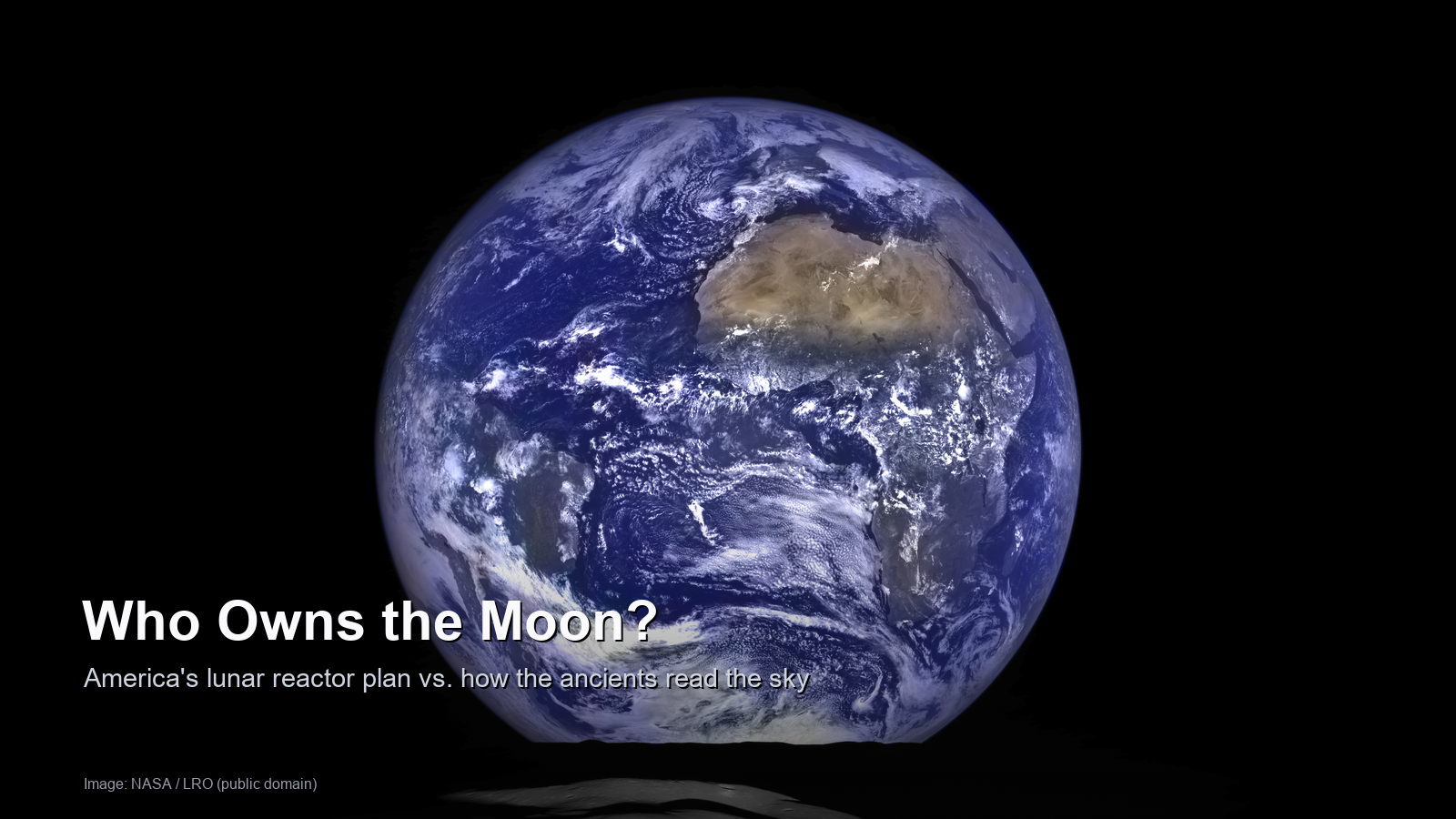
Who Owns the Moon? America’s Lunar Reactor Plan and How Ancient Astronomers Saw the Sky
“A nuclear reactor on the Moon by 2030.” That’s the plan recently laid out by Sean Duffy, the acting administrator of NASA. The motive is stated bluntly — to plant a foothold on the Moon before China and Russia. There’s even open talk that whoever arrives first could declare a “keep-out zone,” blocking other nations…
-
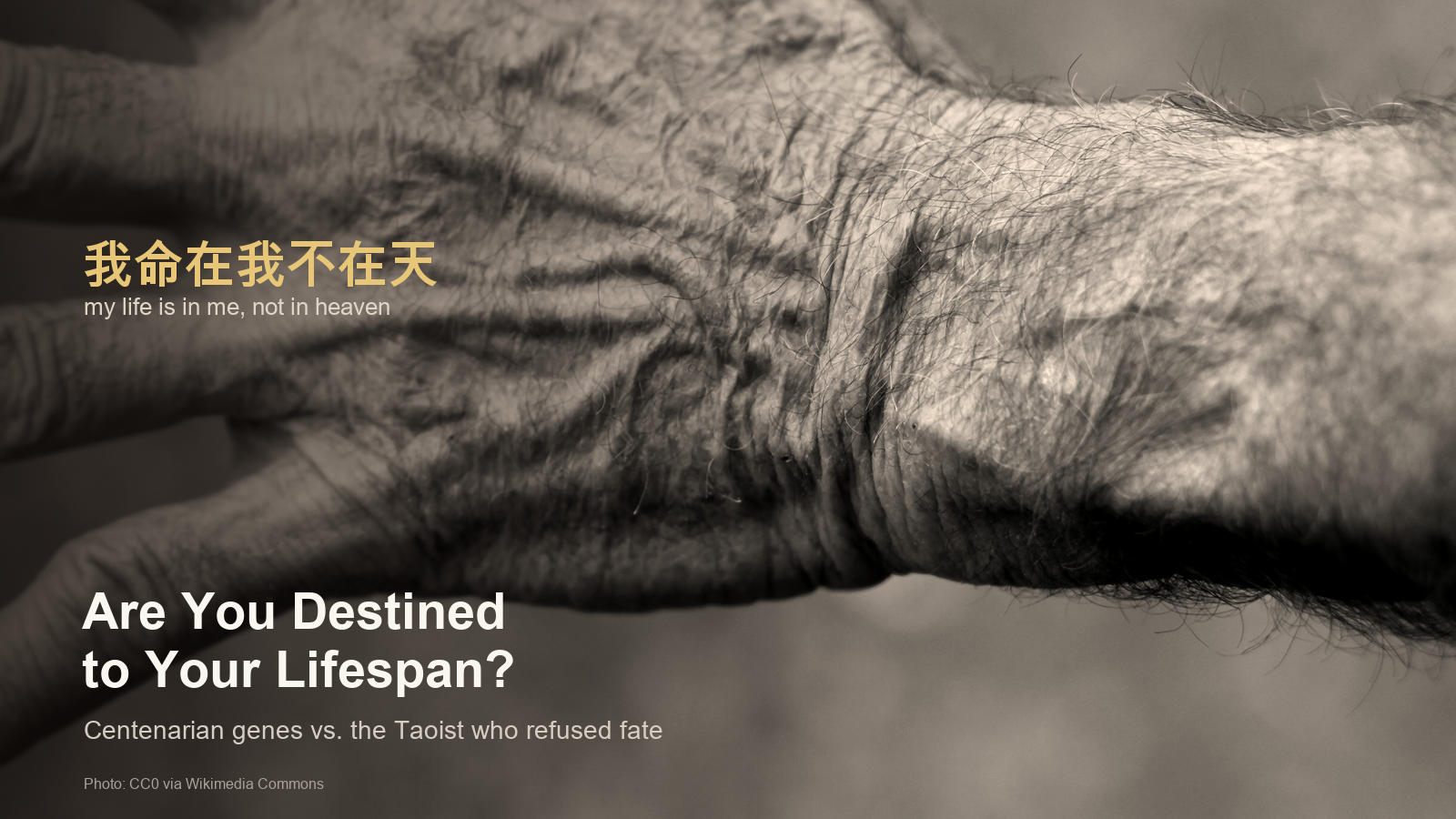
Are You Destined to Your Lifespan? Centenarian Genes and the Taoist Who Refused Fate
Scientists keep finding “longevity genes” in the bodies of people who live past 100. Recent research alone has confirmed that variants like BPIFB4, SIRT6, and APOE2 are unusually common among centenarians. Hearing this, it’s natural to conclude: how long you live is mostly decided at birth, isn’t it? A kind of genetic lottery. The question…
-
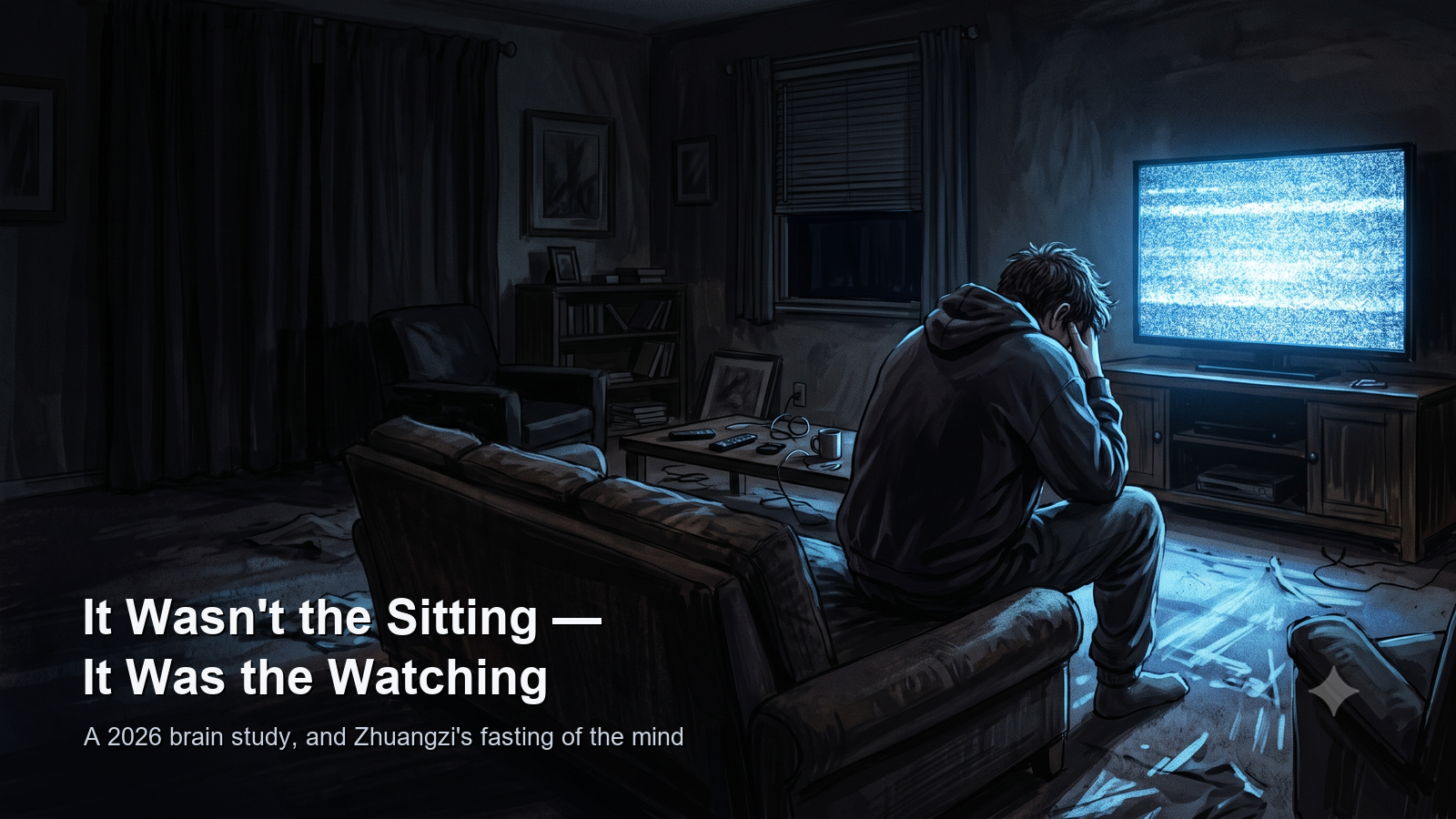
It Wasn’t the Sitting — It Was the Watching: What a 2026 Brain Study Shares With Zhuangzi
We’ve long been told not to sit too much — that sedentary time is the enemy of health. But a study published in 2026 put a strange crack in that assumption. The problem wasn’t the sitting itself. It was what you do while you sit. Following 1,700 Brains Across Decades Drawn from a large American…
-
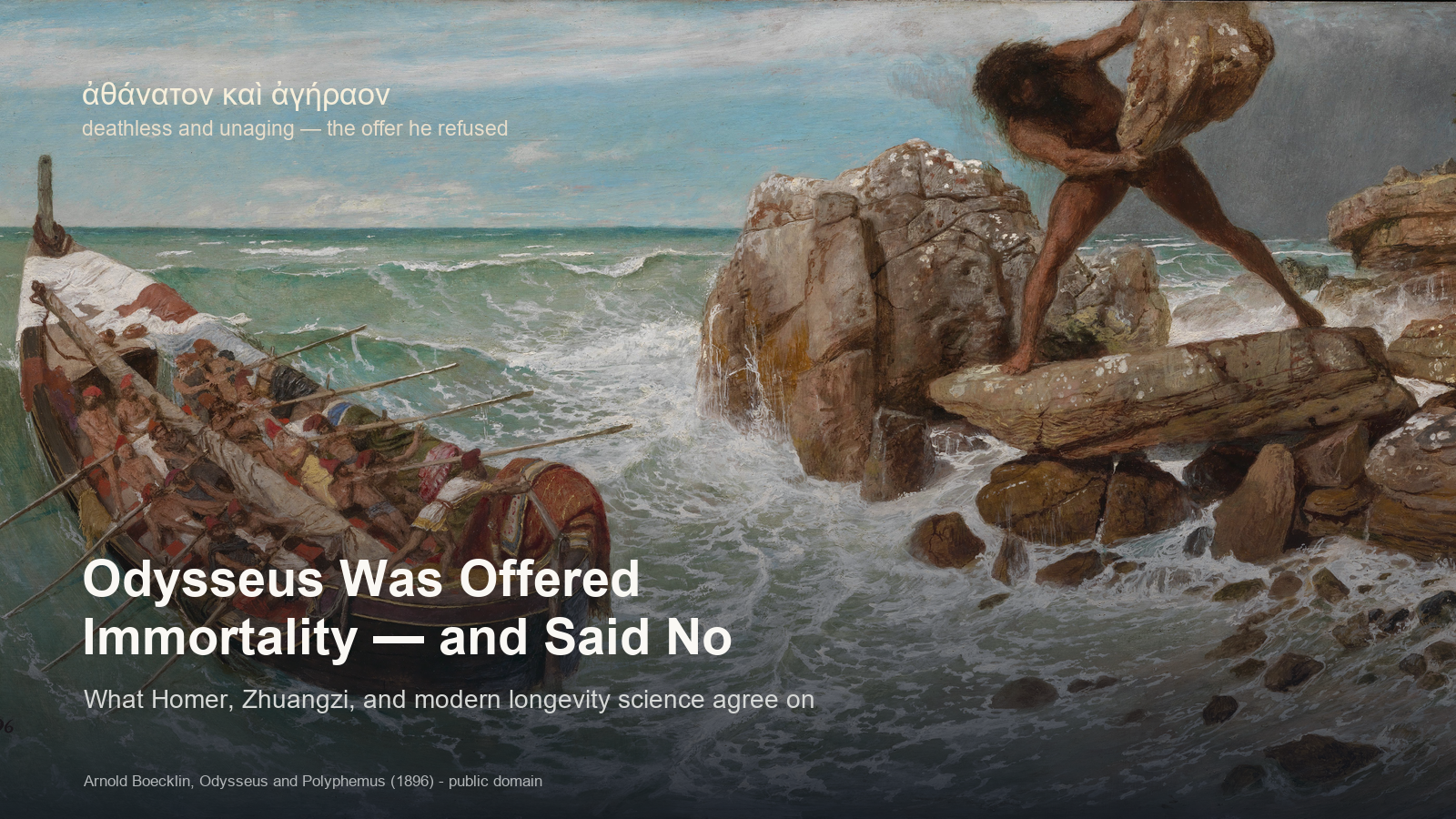
Odysseus Was Offered Immortality — and Said No
The most-watched story on Earth right now is a 2,700-year-old poem. Christopher Nolan’s The Odyssey opened to $264.1 million worldwide, the biggest global debut of his career, and its 96% critics’ score on Rotten Tomatoes is the best he’s ever had. Matt Damon, Tom Holland, Robert Pattinson, and Zendaya have walked into Homer’s epic. And…
-
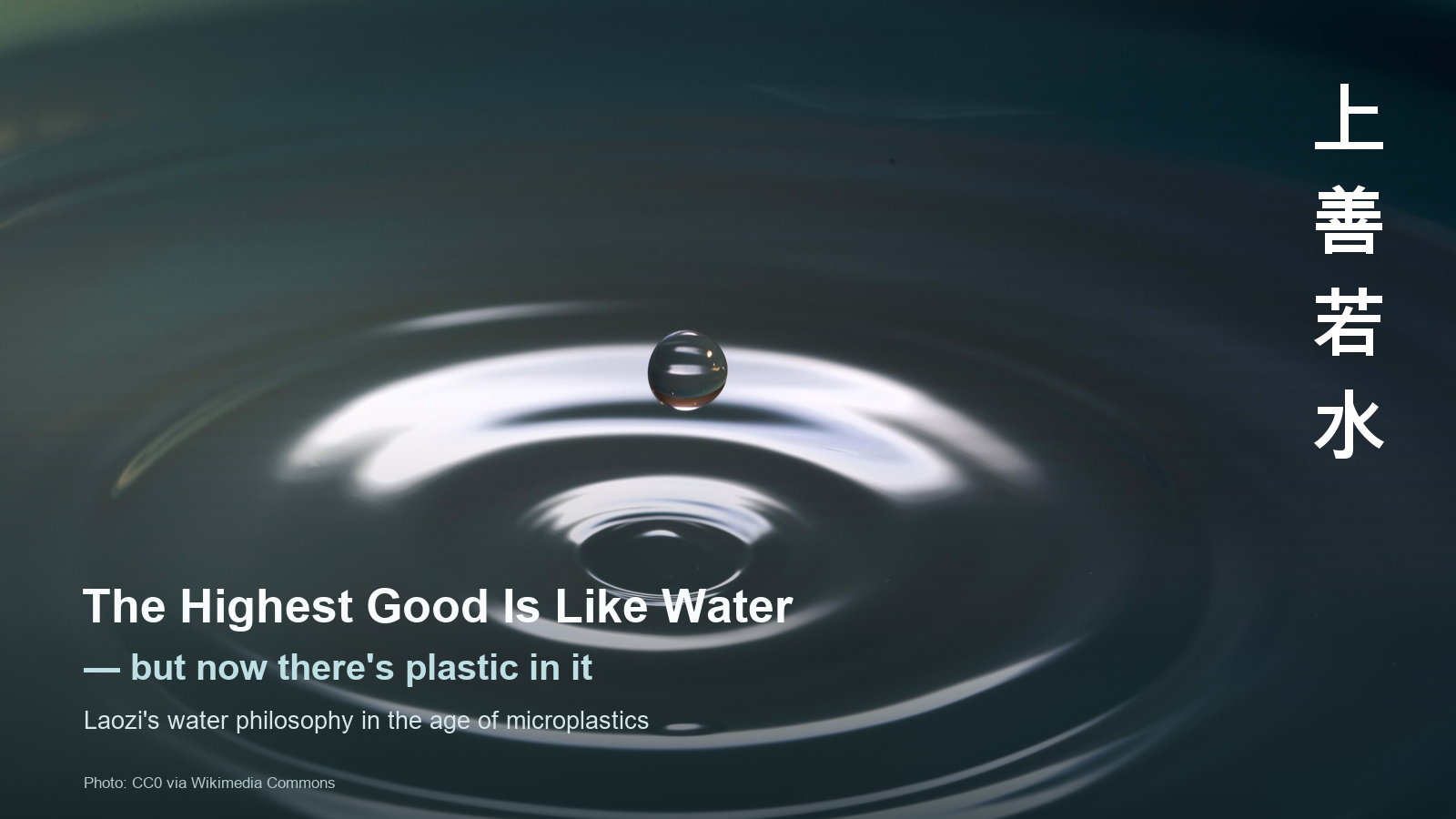
The Highest Good Is Like Water — But Now There’s Plastic in It
You drank water today. So did I. And there’s a good chance that water carried tiny, invisible fragments of plastic. Research published in July 2026 raised the possibility that the nanoplastics riding in our drinking water may even help harmful bacteria survive — by strengthening the protective films (biofilms) the bacteria use to shield themselves.…
-
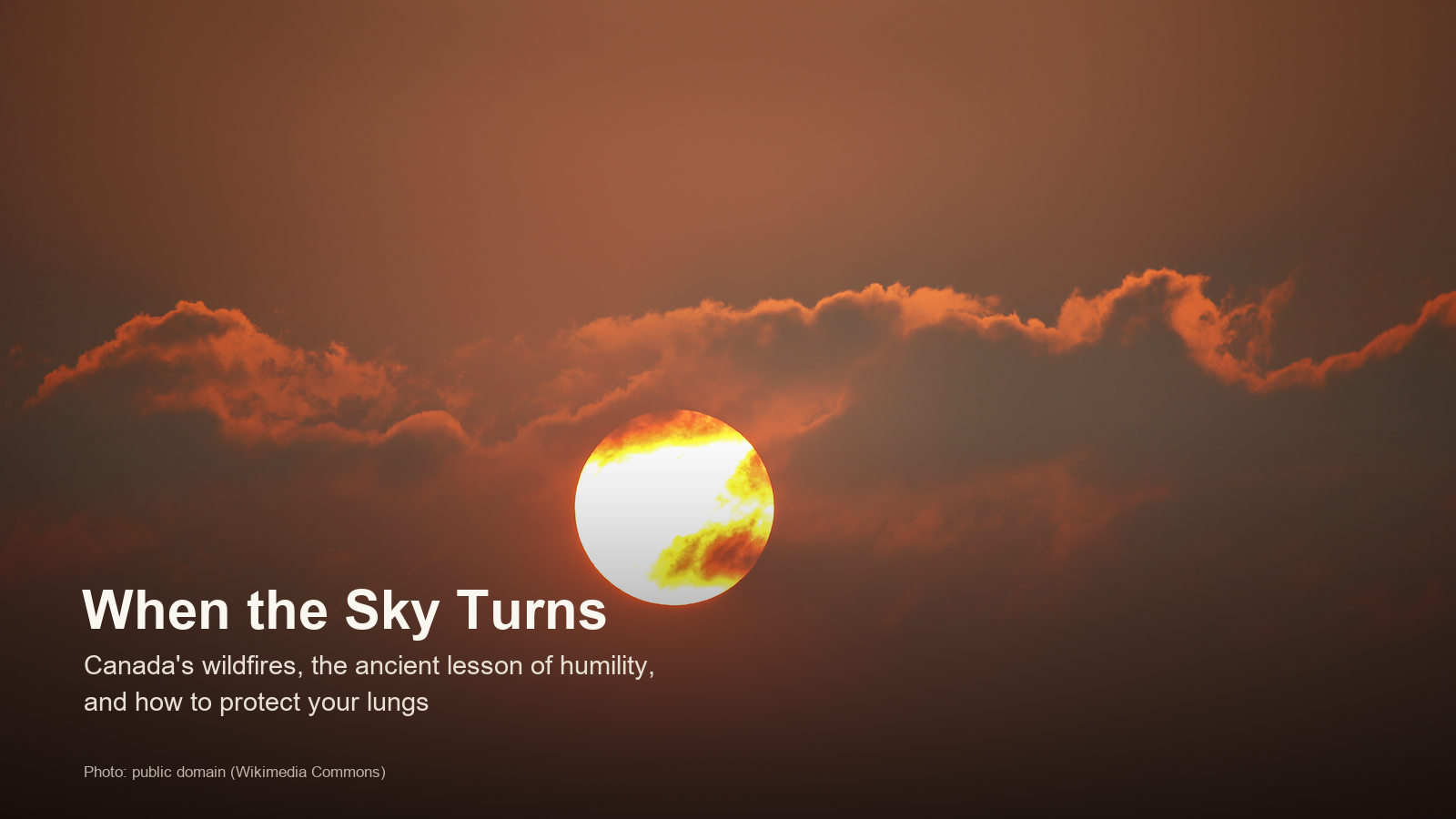
When the Sky Turns: Canada’s Wildfires, the Ancient Lesson of Human Humility, and How to Protect Your Lungs
You don’t have to be near a fire to breathe it. As of July 2026, 796 wildfires are burning across Canada, 60 of them out of control. This season alone has seen 3,137 fires reduce 1.4 million hectares to ash. And the smoke has crossed the border into the American Midwest and Northeast, leaving roughly…
-
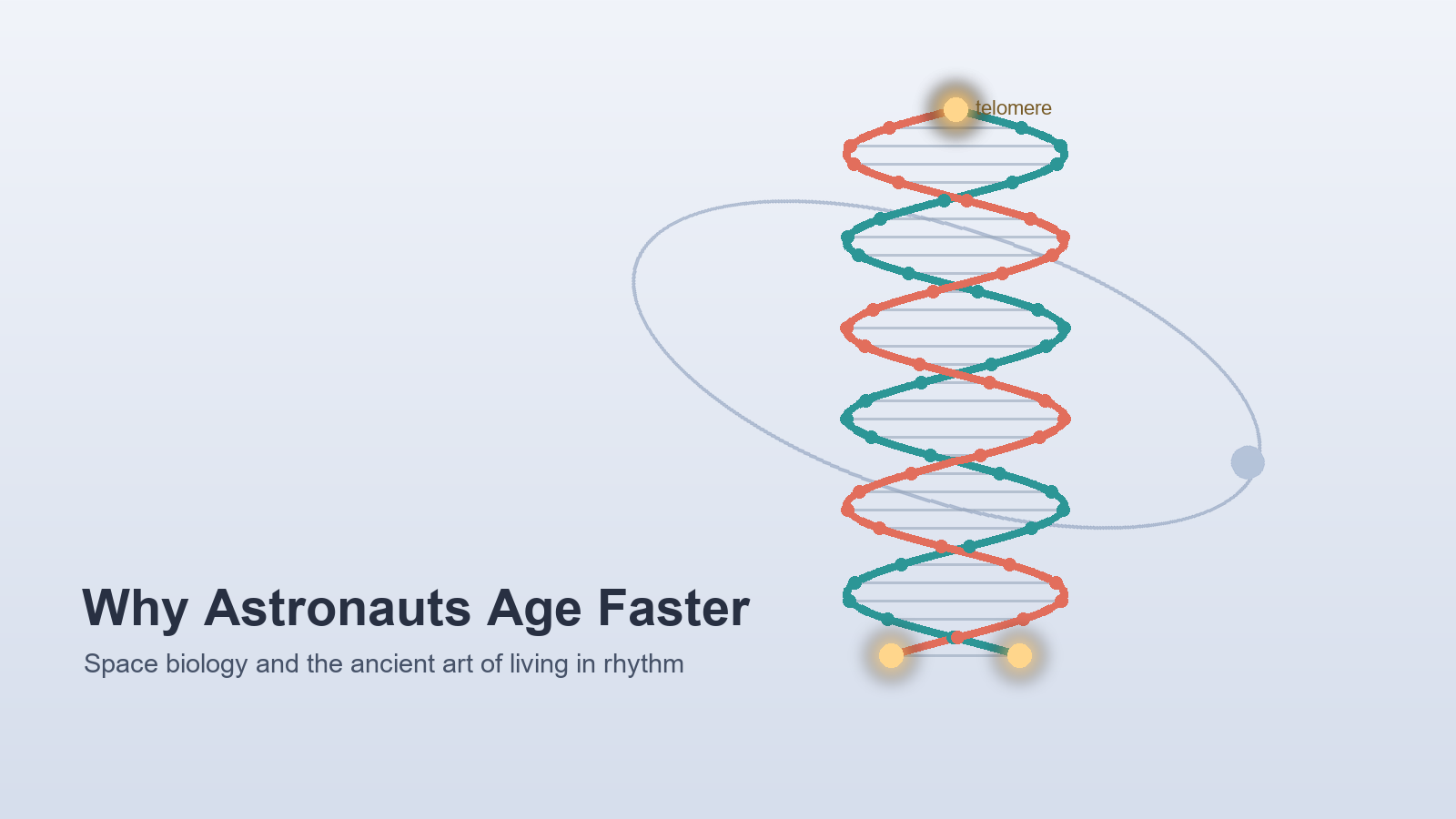
Why Astronauts Age Faster: Space Biology and the Ancient Art of Living in Rhythm
There were two identical twin brothers. One spent a year aboard the International Space Station; the other stayed on Earth. This is the story behind NASA’s famous “Twins Study” — astronaut Scott Kelly and his brother Mark Kelly. When Scott returned from space a year later, his body had grown subtly different from his earthbound…
-
Are Blue Zones Real? The Longevity-Hotspot Controversy — and the Habits That Survive It
You’ve probably heard it. In a handful of “Blue Zones” around the world, people reach 100 at extraordinary rates — Okinawa in Japan, Sardinia in Italy, Ikaria in Greece, held up as meccas of longevity. And yet in 2026, a researcher won an Ig Nobel Prize for arguing that much of that longevity data is…
-
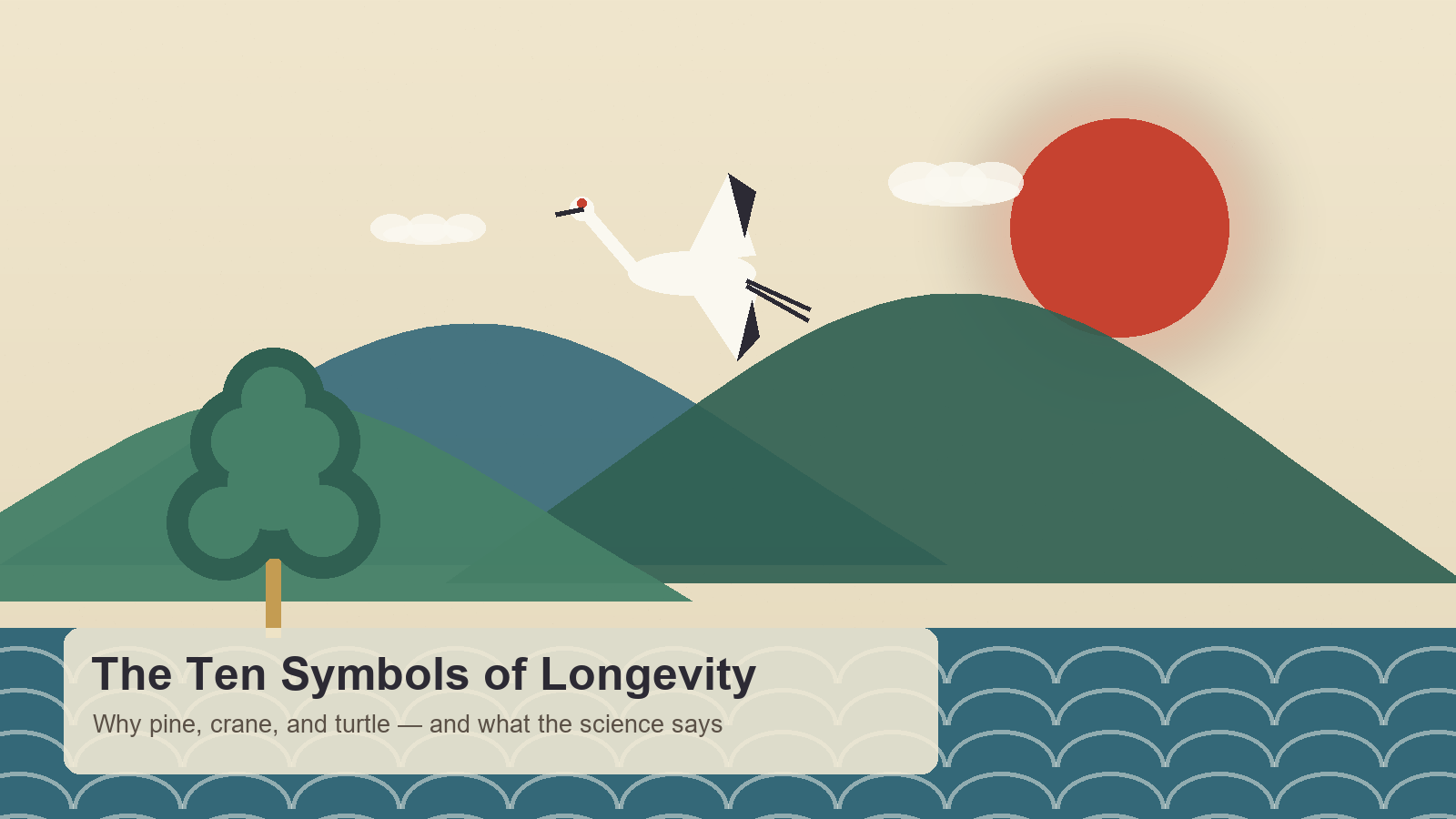
The Science of the Ten Symbols of Longevity: Why Pine, Crane, and Turtle?
Picture an old painting. A red sun rising, ridge upon ridge of mountains, winding water, a standing rock, drifting clouds. Among them stands an evergreen pine; a crane spreads its wings; a turtle crawls at the water’s edge; a deer lifts its head. And somewhere in the scene sprouts a mysterious herb of eternal life.…
-
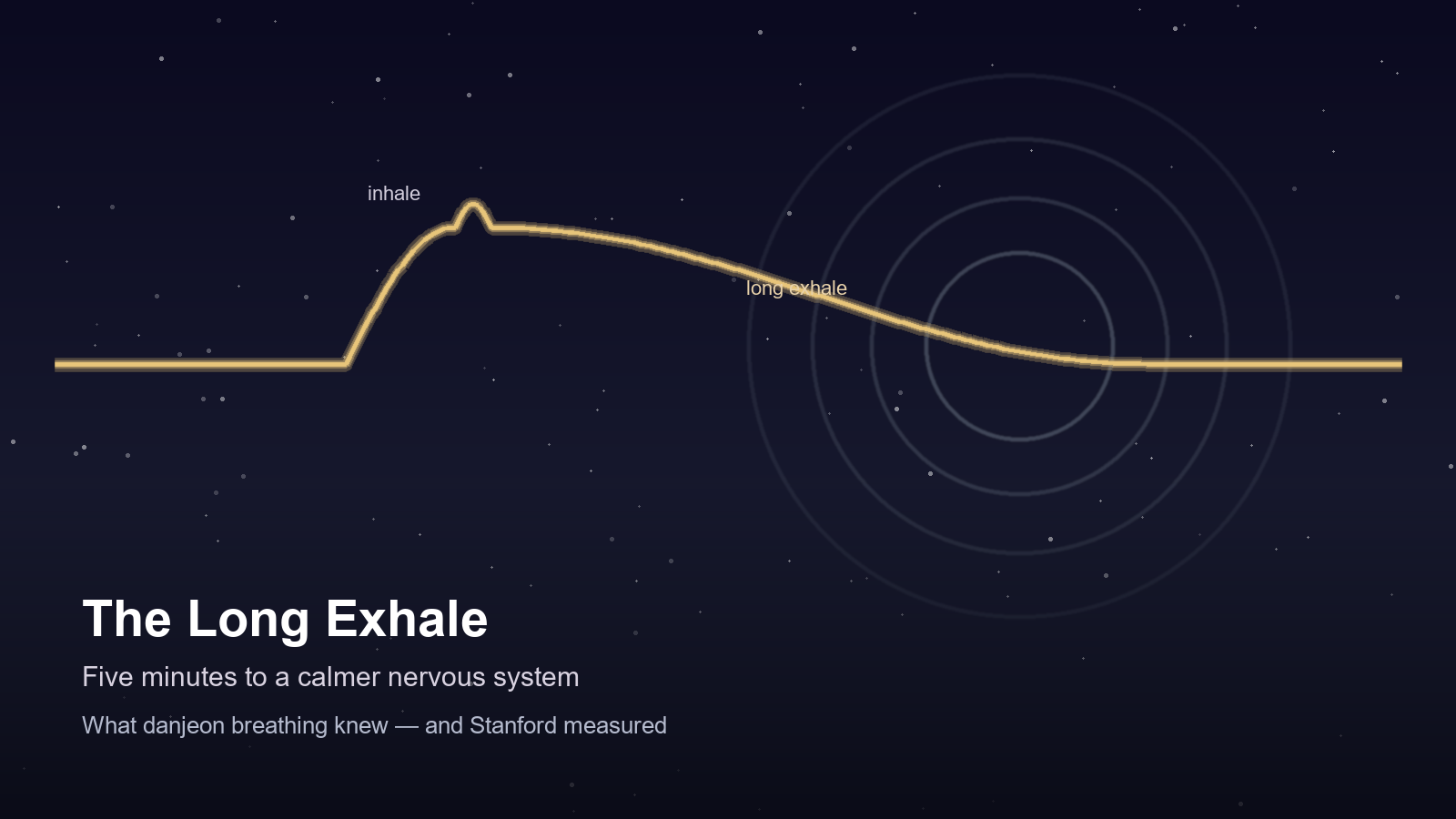
The Science of 5-Minute Breathing: Why the Long Exhale Calms the Mind
Right where you’re sitting as you read this, try one thing. Breathe in through your nose, then exhale very slowly through your mouth — about twice as long as the inhale, all the way to the end. Do it just three times. How does that feel? Notice the shoulders drop a little, the mind settle…
-
Why Eat Hot Soup on the Hottest Day? The Science of Fighting Heat with Heat
On the hottest day of the year, imagine two things set in front of you: a tall glass of iced drink, and a bowl of steaming-hot ginseng chicken soup. Which one does your hand reach for? Common sense says the cold one, obviously — yet across Korea and much of East Asia there’s an old…
-
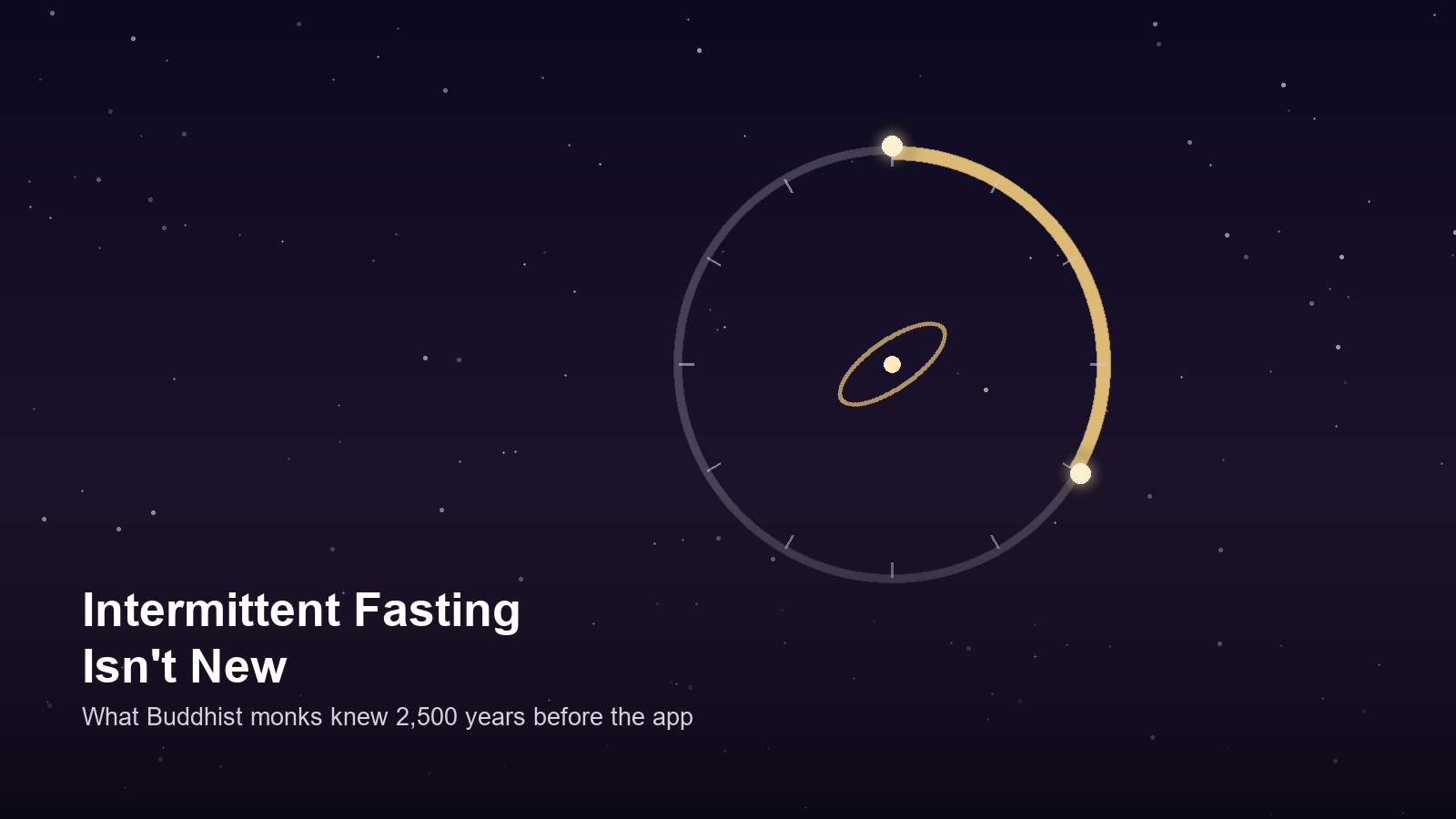
Buddhist Fasting: What Monks Have Done for 2,500 Years — and What the Science Says
“16:8 intermittent fasting” is one of the most Googled diets of the past decade. Fast for 16 hours, eat within an 8-hour window — the latest health protocol that Silicon Valley CEOs and fitness influencers race to adopt. Except Buddhist monks were already doing exactly this 2,500 years ago. They just didn’t call it a…
-
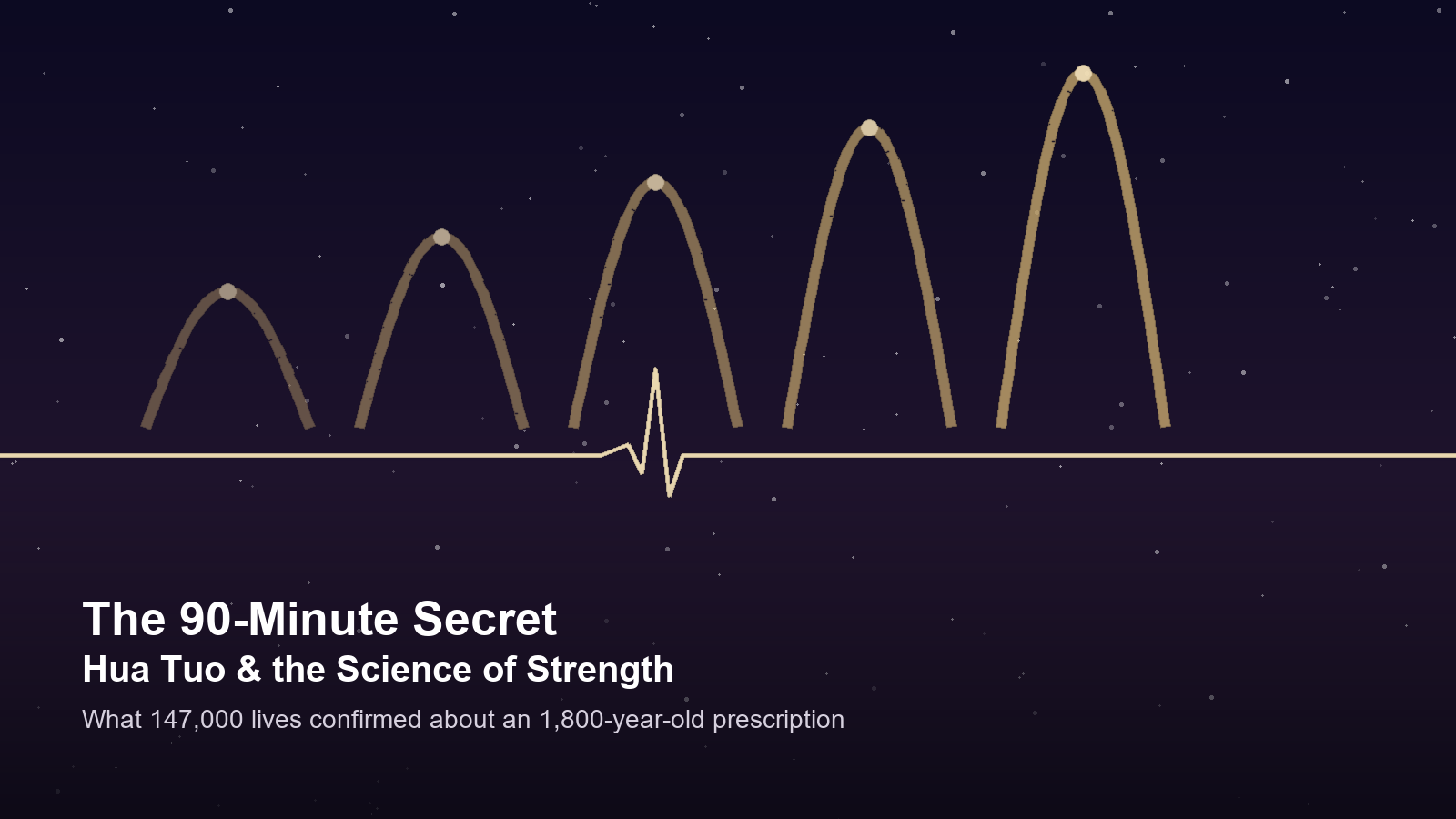
The 90-Minute Secret: Hua Tuo’s Five Animal Frolics and the New Science of Strength and Longevity
“Flowing water never turns stale, and a door hinge never gets worm-eaten” (流水不腐, 戶樞不蠹). This is what Hua Tuo, the legendary physician of the Later Han dynasty, told his disciple while teaching him the Five Animal Frolics (五禽戲). Keep the body moving, and illness finds no room to settle in. It was a prescription written…
-
Black Holes and the Taoist Void: How Emptiness Becomes the Most Powerful Force
Astronomers with the LIGO-Virgo-KAGRA gravitational-wave network recently released the largest catalog of black hole collisions ever assembled — 390 confirmed merger events. Buried inside that data were signals that may finally offer a real lead on primordial black holes, an idea that’s existed purely as theory until now, and the news sent a ripple through…
-
SpaceX Starship and the Taoist Immortals: Why Humans Have Always Wanted to Go Beyond
I was watching a Starship launch livestream last week when a strange thought hit me. All that money, all that time, all that risk humanity keeps pouring into pushing a giant chunk of metal into orbit — why? “Because we need to get to Mars” never felt like a complete answer. So I went looking…
-
![[ ARIRANG ] – An Ancient Message from the Korean People to Humanity](https://ancientlongevityscience.com/wp-content/uploads/2026/05/4-2.webp)
[ ARIRANG ] – An Ancient Message from the Korean People to Humanity
1. Why Have We Forgotten Its Meaning It is a song sung for thousands of years,yet few can truly explain its meaning. In 1896, the American missionary Homer Hulbert,who first transcribed the melody of Arirang,reportedly wrote: “I asked Koreans the meaning of Arirang,but no one could answer.” Scholars proposed countless theories regarding its origin and…
-
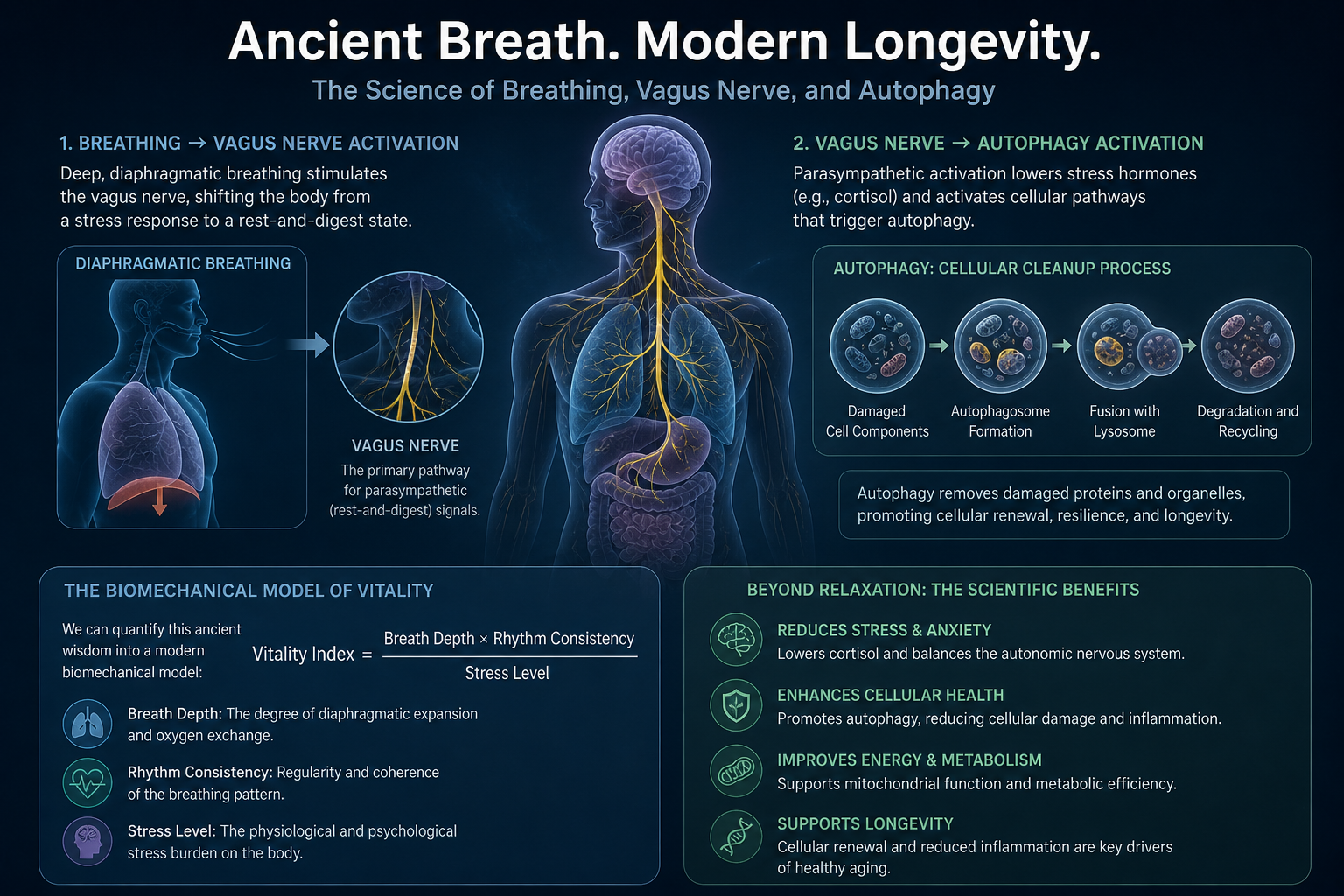
The Taoist Biohack: What 虛心實腹 Really Does to Your Body
The modern longevity industry spends enormous sums studying autophagy — the body’s process of clearing out damaged cellular components and recycling them into something usable. It is one of the most exciting areas in aging research. And it has become fashionable to claim that you can switch it on with the right breathing technique. A…